
The Year's Work in Four Maps: A Visual Roundup
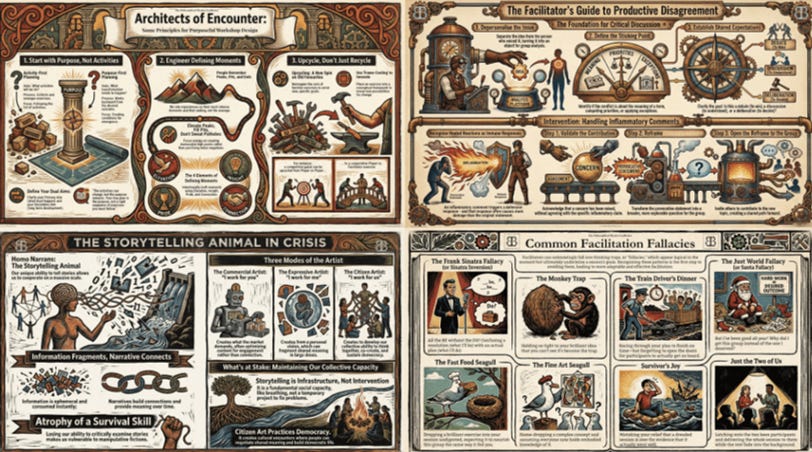
I WOULD LOVE TO BELIEVE that logging in to The Philosophical Theatre Facilitator archive is as much a part of your morning routine as meditation, working out, and forest bathing. But like those other aspirational habits, it probably isn't. The newsletter comes out fortnightly, which means most people engage with the ideas one at a time, as they arrive in your inbox. But those individual posts connect into larger frameworks - conceptual systems for thinking about facilitation, workshop design, and the democratic function of theatre.
This roundup gathers some of this year’s posts into four visual maps: practical tools for designing purposeful encounters, principles for navigating difficult discourse, an argument for why this work matters beyond individual transformation, and a field guide to common thinking traps. Consider these reference materials for 2025.
1. Some Principles for Purposeful Workshop Design
Workshop design often defaults to selecting activities rather than clarifying purpose. This framework argues for starting with what transformation needs to happen, then working backward to create the conditions for emergence. Whether you’re planning drama workshops, deliberative forums, or applied theatre projects, these principles help ensure your design serves participant needs rather than facilitator habits.
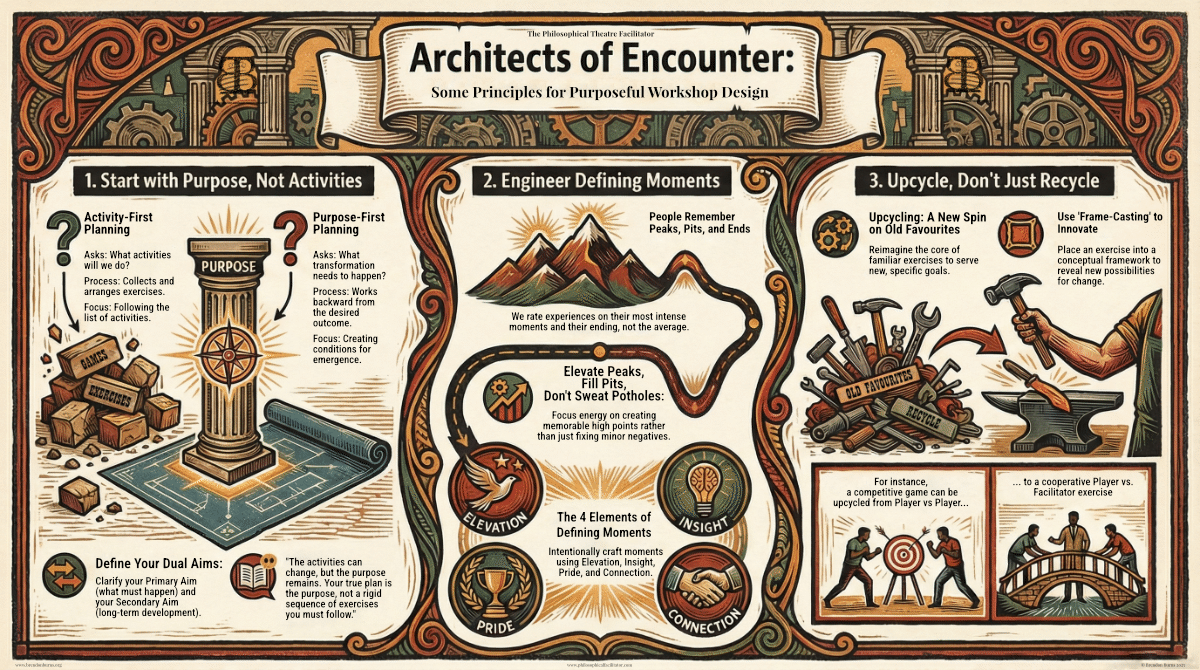
Designing From the Heart of What Matters / The Power of Moments / Why Your Next Great Workshop Exercise Might Be One You've Used Before
2. Stopping It All Kicking Off!
Handling controversial topics requires more than good intentions - it demands strategic preparation and reactive techniques. This framework consolidates the year’s work on discourse facilitation into one navigable system: foundational principles for laying groundwork before controversy emerges, and anti-inflammatory techniques for managing flare-ups when they occur. The strategic euphemism method offers a specific three-step approach for keeping conversations productive when inflammatory language threatens to derail them.
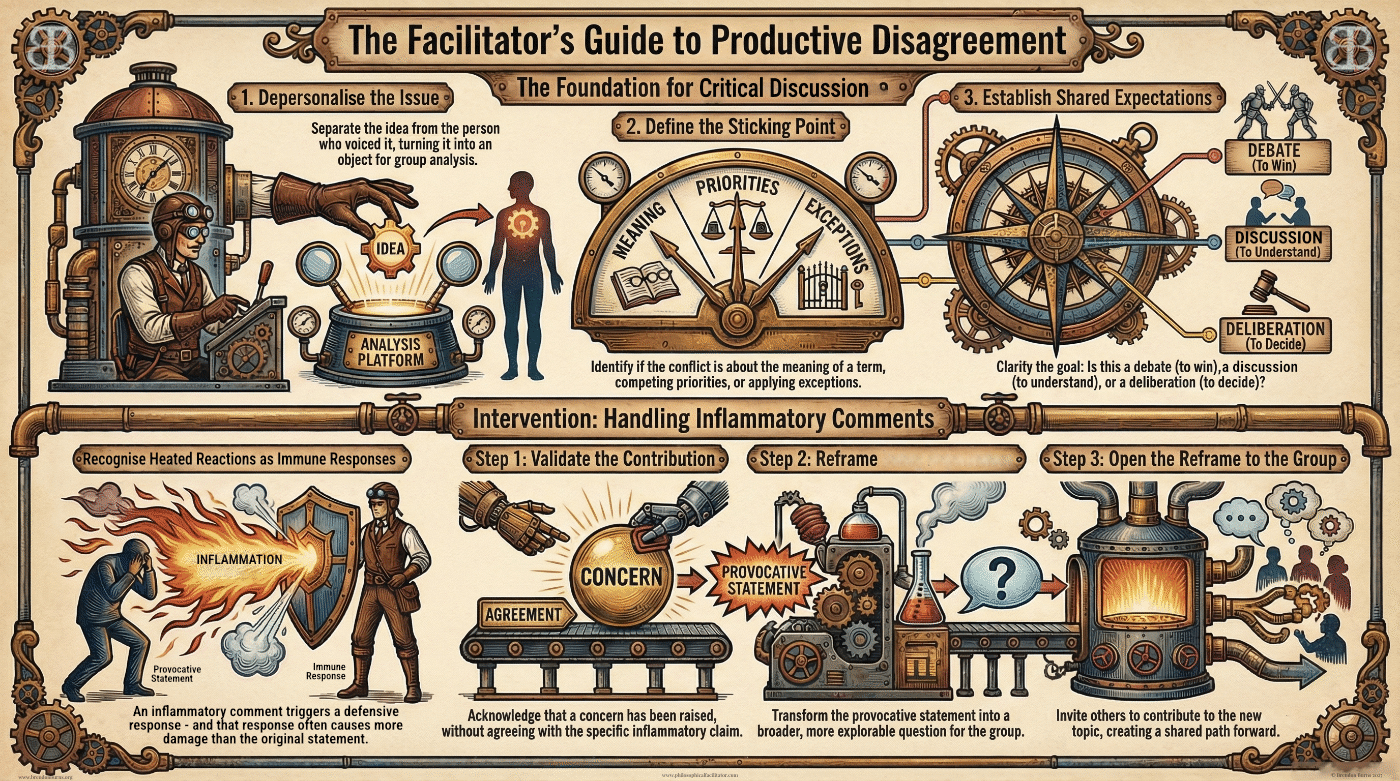
Who Disagrees With Jo / When the 'Shoulds' Don't Match / Did Someone Explain The Rules / I'm sorry but...
3. The Storytelling Animal in Crisis
Humans are uniquely able to coordinate at massive scale through shared stories - but that capacity is under threat. This framework argues that storytelling isn’t just creative expression or market commodity; it’s fundamental democratic infrastructure. The three modes of artistic contribution - Commercial Art, Expressive Art, and Citizen Art - represent different relationships between artists and society. Only Citizen Art maintains storytelling as a collective capacity rather than individual consumption. This framework clarifies what’s at stake when our ability to create shared meaning atrophies.
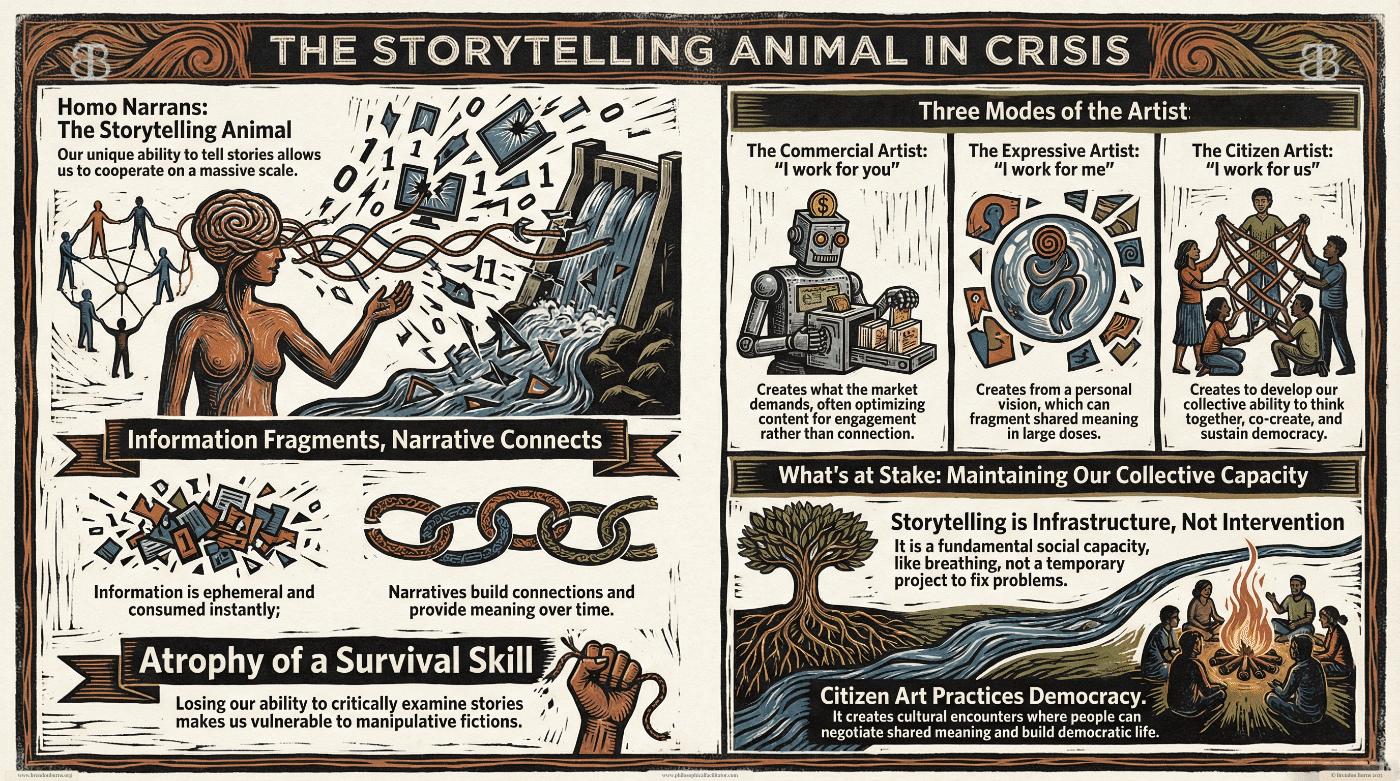
Stop Apologising For Drama / Stop Selling Stories- It’s Breathing, Not Intervention
4. Common Facilitation Fallacies
Throughout the year, we’ve examined thinking traps that undermine facilitation effectiveness - patterns that appear logical in the moment but ultimately derail sessions or planning. From holding on too tightly (The Monkey Trap) to mistaking participant relief for success (Survivor’s Joy), these eight fallacies represent the most common ways facilitators unknowingly compromise their work. Recognising these patterns is the first step to avoiding them.
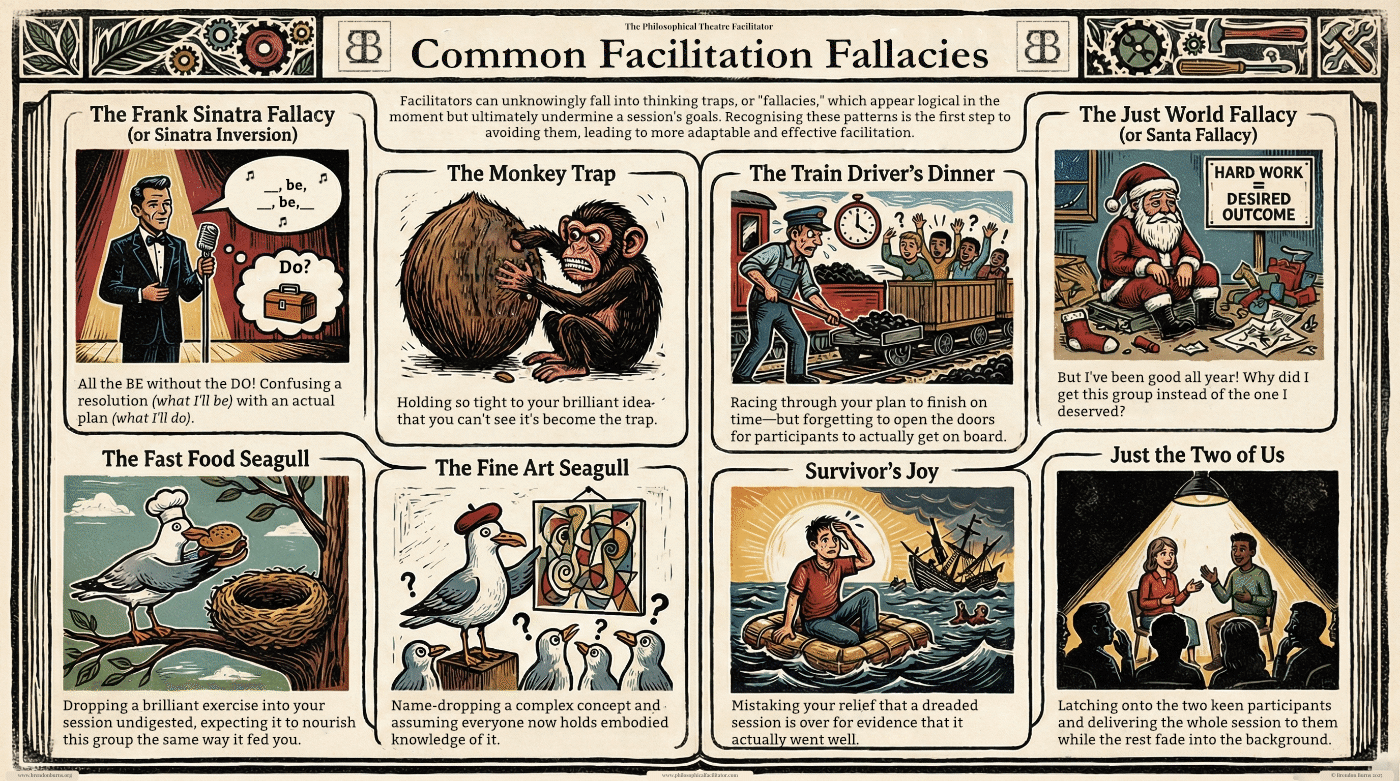
When Santa Brings You The Wrong Project / Do be do be do… / The Monkey Trap / The Fast Food Seagull / The Train Drivers Dinner
And that’s it for 2025
Stick these on your wall if they're useful. The newsletter returns to its fortnightly rhythm in January, picking up where we left off with the discourse series. All the best for the new year and thanks, as ever, for subscribing.

I write the newsletter from various coffee shops, imagining I’m chatting with my subscribers over a cappuccino. So if you ever find an issue particularly helpful or thought-provoking, you can now literally buy me the coffee that will fuel the next one. This approach keeps the newsletter free and accessible for everyone while still allowing you to support the work when it resonates with you.