
But where do I put my hands?
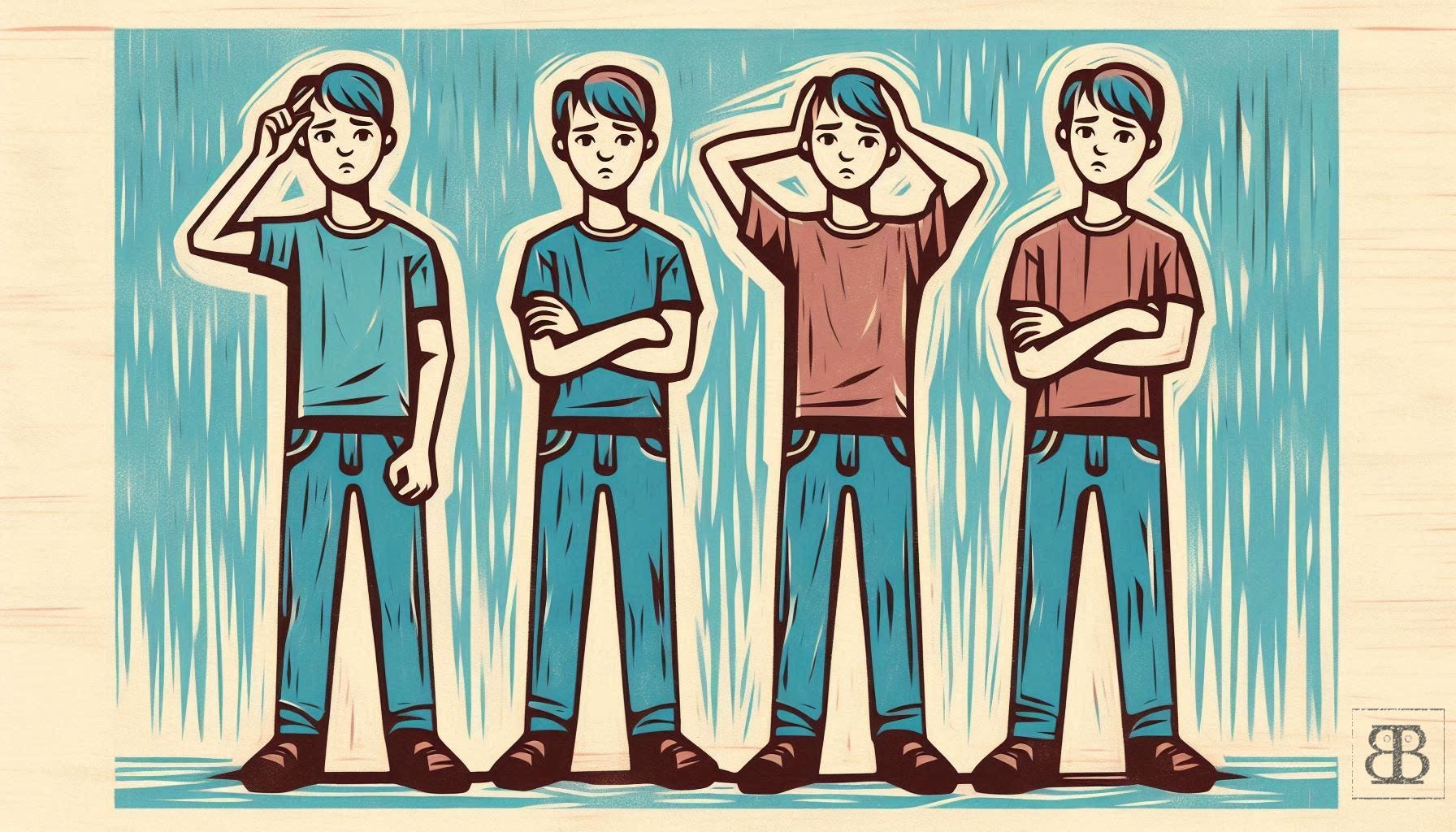
One of my favourite learning anecdotes is drawn from a conversation with a young facilitator I was coaching about ten years ago. To protect the innocent, let's call them Ferdy.
We were discussing their progress at the midway point of a week-long residency. I had observed one of the sessions and noticed that the structure of the exercises were creating something of a rift between a minority of confident participants and a larger group who were becoming increasingly self-conscious as the work grew more sophisticated. Ferdy and I then discussed moving away from whole group delivery in the afternoons to small group work. The hope was that this would allow space for the less confident to playfully engage with the work before 'breaking cover' in sharings at the end of the day.
A day or two later we met for a catch-up. By all accounts the structure change had worked well. The self-conscious members of the group were more comfortable experimenting in a less exposed setting. Interestingly, this seemed to have also improved the engagement of the confident performers. Bereft of an audience they focused more on technique than getting laughs. The new plan had worked.
"Good stuff…" I said, "though I'm sensing a but…?"
“Yeah… I've got a bit of an issue. It's not about content or structure. I suppose it's a facilitation question.”
“Excellent! What's the issue?”
I was heartened! All too often reflection focused on choice of exercise, stimulus, or structure rather than the manner of delivery.
Ferdy's face contorted with discomfort, perhaps a fear of asking a question that was too obvious.
"Go on…"
A pause.
“Where do I put my hands?”
Sensing my confusion Ferdy launched into an animated explanation:
When the group is like split up, you know, I go around and check in to make sure everyone knows what they're doing and I, you know, like you said before, want to give them space without me turning up every thirty seconds. So I go to the side. In a place where everyone can see me - like we talked about, and then I'm like... I don't know what to do with, where to put my hands. I even tried copying you - but it doesn't feel right because I don't have a beard, I just get so self-conscious.
At this point Ferdy, having adopted a series of poses whilst speaking, crossing their arms, hands on hips, in pockets, leaning on the wall ends with one arm crossed and the other covering their mouth and chin. Apparently, this is what I do!
To be seen or to see
We can all probably recognise what Ferdy was talking about. It reminded me of the persistent embarrassment common to mid-teens The hyper-awareness of self that sets in when you're in vague proximity to someone you want to impress. The conviction that everyone is looking at your weird [insert self defined flaw here] and judging you. The constant not knowing how to 'be' in front of other people. But this was an altogether different context.
The problem, I explained to Ferdy, is that by concentrating on how we are 'seen' we forget to 'see'. The job in that moment, our professional responsibility, is to observe. Are the groups engaging in the task? Does anyone look stuck? Has a group headed of on a tangent?1
"And if they do look at you" I asked "What do you imagine they want to see?"
That I'm paying attention, that I'm interested! And that's it, I don't know how to look like I'm paying attention!
Here lies a trap. In a society built on curated content, optics and status updates it is easy to lose sight of what can be the gulf between appearance and action. Would it not be simpler (and more useful) to actually pay attention rather than agonise over how to look interested. I asked Ferdy what they had done with their arms when leading exercises with the whole group earlier in the day.
I've no idea. I was busy doing stuff. I wasn't thinking about my arms. Oh...
I think that's when the point finally hit home. To be fair to Ferdy, they were already wrangling with the contradiction - that's why they brought it up.
I come back to this anecdote every time I talk to practitioners about self-consciousness. It's a useful short-cut for inexperienced facilitators - if you concentrate on doing you’ll forget about being seen. However, I think there are a couple of other insights hidden in here.
Firstly, whilst it's probably been some time since many of us felt that awkwardness of taking the floor to lead a workshop for the first time, the mechanics of self-consciousness are just the same for our participants. When an individual or group are showing signs of self-consciousness it is likely that at some level, big or small, focus has shifted from doing to being seen. This may be because the required action has not been broken into do-able chunks or that failure will be too visible or come with a social cost.
Secondly, and more widely applicable, we must also be careful not to pathologize the interoceptive state we label self-consciousness. Rather than something just to be overcome, occasional self-consciousness is useful information, an indicator of our values in the moment. Recognising that we have switched awareness to how others are perceiving us is either a sign that we are somehow out of place, that our actions are out of step with the environment, or that we have ceased to act at all. In the first we may have over-valued our interpretation of the moment - this was not the time for a joke, polemic on politics or a frank critique of the performance. With regard to the second, insufficient attention to the moment allows the value of posterity - how we will be remembered or categorised - to rise to the fore , the active, giving 'I' is replaced by the passive, consuming 'me'. In both cases the road out of the woods is the one signposted 'doing the job'. It's long, somewhat twisty, but so full of obstacles you'll be too busy to worry about what you look like.
There is nothing more dispiriting than seeing the first group show back their scene and realising that your group misunderstood. It takes a skilful facilitator to feedback in a way that doesn't send the wrong message to the rest of the participants whilst at the same time being sensitive to those who got the wrong end of the stick. It is so much easier to have spotted the misunderstanding and headed it off earlier.
This was a handy blog! 😉