
How do you fly your kite?
Using metaphor to conceptualise practice
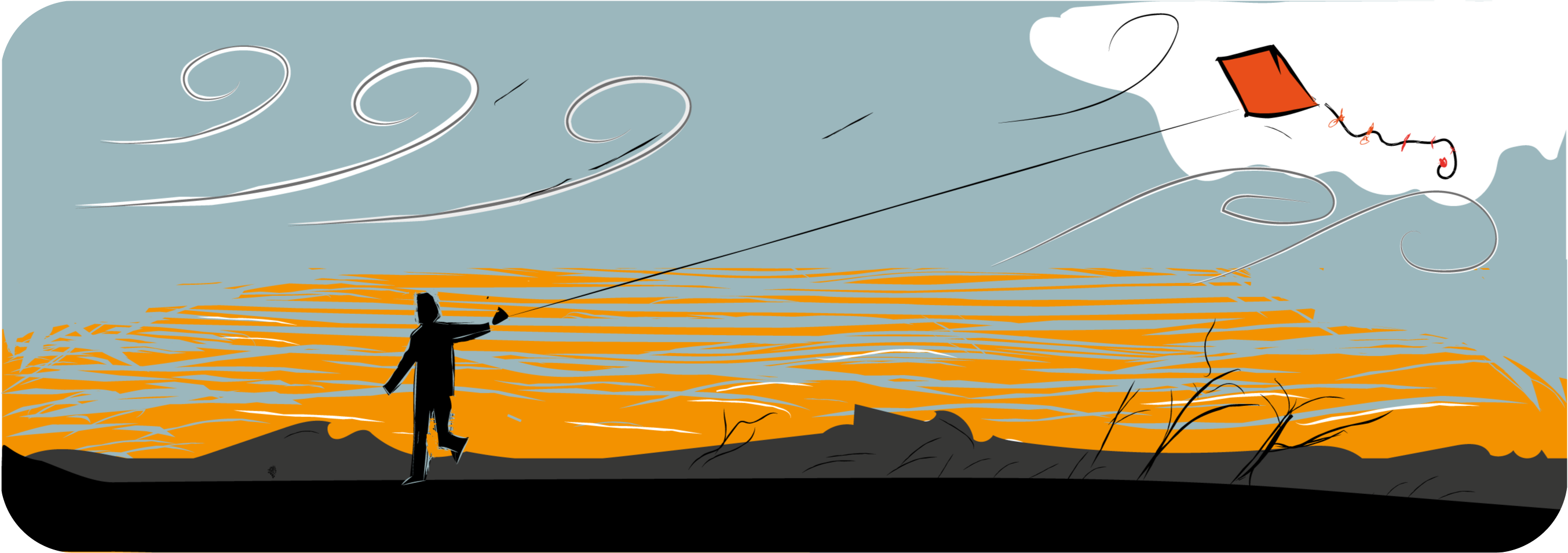
Sometimes I hold on too tight but surely that’s better than losing control?
Finding the appropriate balance between order and creativity is probably one of the most significant ongoing challenges for any facilitator. Whether you conceive of the distinction as that between control and freedom, discipline and play, or focused and fun, it remains a unique balancing act to be replayed every time we run a session. Most facilitators have a tendency to favour one end of the spectrum. Some, adhering to old-school performing arts training paradigms, insist discipline is the route to freedom. Others, drawing on critical pedagogy and other developmental theories, abjure top-down control in favour of free agency. Like most things, tyranny exists at the extremes of both positions. The laid back invitation to 'do whatever you feel' is as suffocating as the dictatorial 'do what I say'. Happily, very few occupy these extreme positions. That said there is also no definable middle ground and as a result we face a 'balancing act' on a daily basis. Much as we would hope that instinct will guide us, it can be useful to take a moment to conceptualise the dynamics at play.
A metaphor I like to use is that of flying a kite. As everyone knows, kites fly due to the interaction between the wind and the surface area of the kite fabric. If there is insufficient wind the kite will crash (usually) tail first. Too much wind and it will nose dive or fall apart. The only control the flyer has, beyond the location and timing of the launch, is the length and tension of the line. So, to put the concept to work let's imagine the 'kite' symbolises the activity or exercise, the 'wind' the energy and engagement of the participants1 and the kite flyer the facilitator. If this is the case what insights can you glean from the following:
Now, I know what the metaphors means to me - standing with your back to the wind, for instance, makes me think about focusing on where participants want to go, not just where they've been. But the true utility in practice metaphors is found in a personal reflective response. IF the challenge of balancing of order and creativity can be seen in the relationship between the wind, the kite and the flyer, which of the statements above ring true for you (positively or negatively).
How do you fly your kite?
I think it's important for the thought experiment to note that the wind represents the energy and engagement in the room, not the participants themselves. Furthermore, energy and engagement can ebb and flow just as air currents are variable and can change depending on altitude.