
I'll sort that over the summer!
Letting a mystery solve itself while you do other things
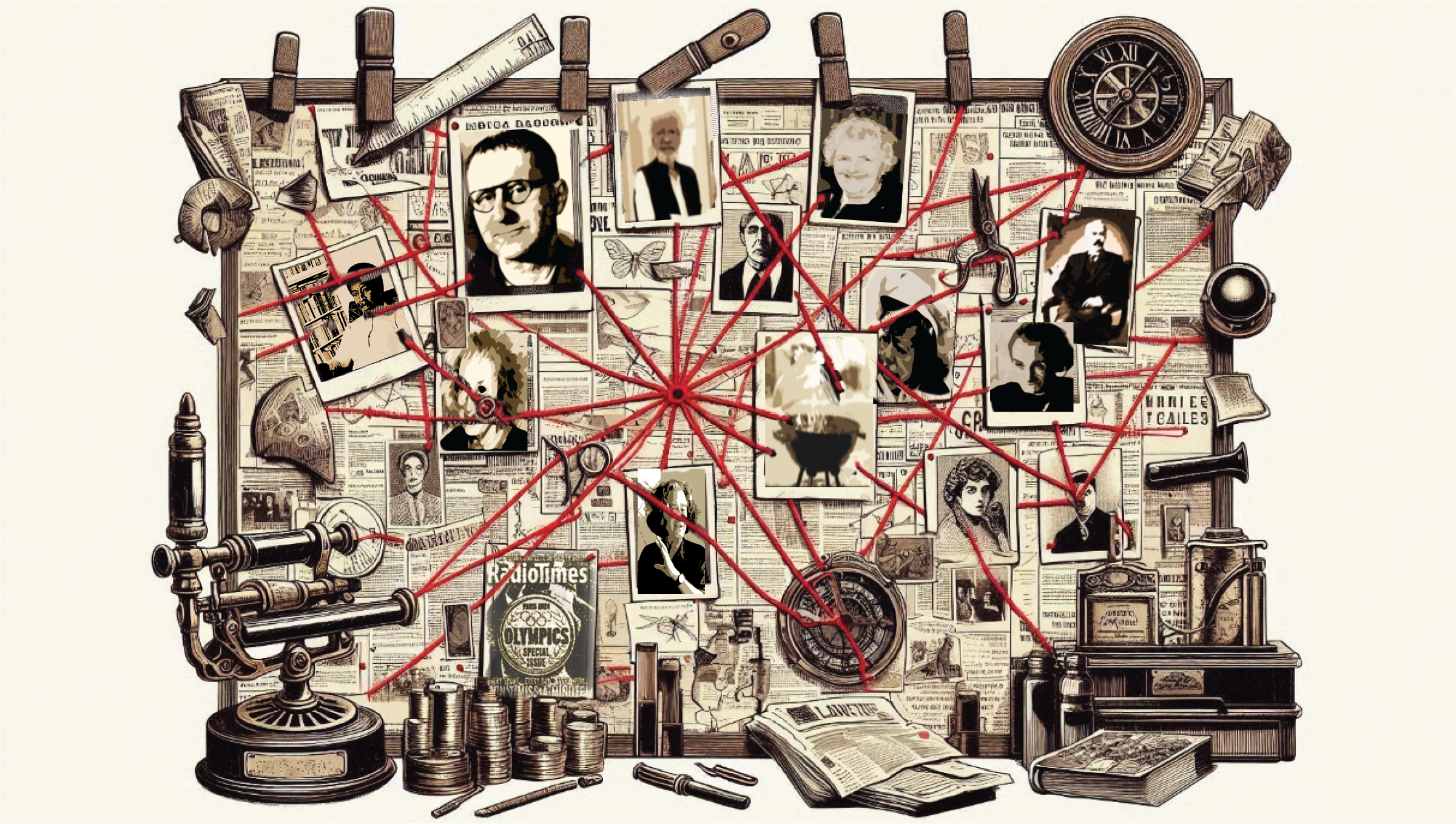
As practitioners in the Northern Hemisphere enter the final weeks of summer holiday time I thought it might be useful to tailor a post specifically to the great delegation tactic of:
'I'LL SORT THAT OVER THE SUMMER'
For those whose work connects to formal education August offers a well-earned break from delivery. Yet, as the ubiquitous 'Back 2 School' offers already on high street attest, September is always just around the corner. How often do we find ourselves flying headlong into the new term reaching for the same workshop materials and teaching strategies that we had so vociferously decided not to use again?1
If this happens year after year then there is a good chance you are viewing the summer break through the lens of Optimism Bias. Free from our standard delivery schedule, and likely with no to-do list or day by day plans, it is easy to convince ourselves that we will have time to spare. We imagine weeks of doing whatever we want, easily using a quiet hour or two for a bit of deep thinking. Except, that's unlikely to happen, and what is more, we know it.
And, to a certain extent this might be something of a necessary illusion - a short term defence mechanism. We can dodge overwhelm now by imagining a mythical moment of catch up in the future. Of course, like the anticipated tax-rebate we mentally spend many times over, reality never lives up to expectation. But by then we're often in another period of overwhelm, and, in a manner not dissimilar to finding the end of the rainbow, the mythical catch-up time is always somewhere else.
This isn't going to turn into a productivity post about how to wring every last efficiency out of last few weeks of leave. If that's your thing, apologies, I'm sure you can find something more suitable on YouTube (though for a more mature and nuanced opinion I would recommend Cal Newport's books Deep Work and Slow Productivity). Taking time to recharge and rebalance energy and focus back to life outside work is essential, for both personal and professional well-being.
That said, time away from standard routine can be very productive for creative thinking. Innovative thoughts need space to grow, and it's no coincidence that the best ideas occur when we're focused on something else - walking the dog, in the shower, or dozing off on a sunbed. The trick is to find a way of retaining these insights that maximises your ability to turn them into something useful whilst minimising the impact on your downtime.
So what can we do in the last few weeks of the summer break. A method I've used very productively is the 'mystery board'. Imagine a detective who goes about their day-to-day work but still notices the odd thing that links to a cold case they were never able to solve. What do they do with the new information? They take it home and add it to a pin board of other clues. How do they recall the relevance? By linking the new evidence to the old with a piece of string and perhaps a question on a post-it note. Years later, the final piece of information is added and everything falls into place. The detective presents the case to the Chief Inspector who marvels that they've been solved this whilst working on other cases.
Step 1: Centre of the board - The hunches
The first step is to identify the 'mystery' you want to investigate. This should be some aspect of your practice that you want to innovate or refresh, but are not quite sure how. Write this down on a piece of paper, index card or digital equivalent.
If it is something that's been bugging us for a while, we normally have a few suspicions as to what is causing the problem even if we don't know the solution. Let's call them your 'hunches'. Write each on their own card (probably no more than 3-4) in total.
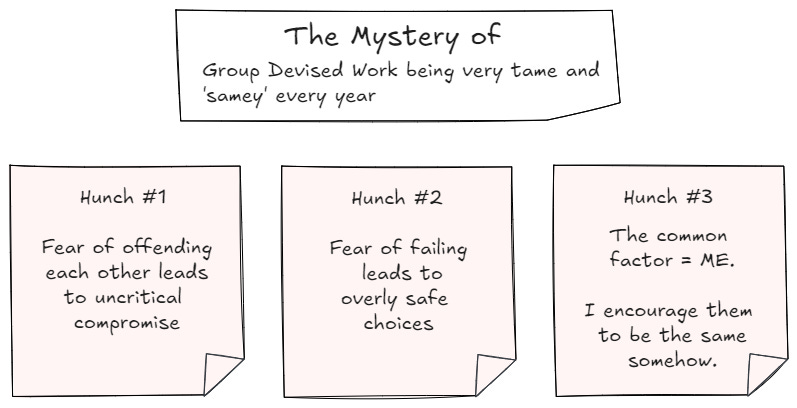
This is the centrepiece of your mystery board. The format is up to you. It can be done digitally in PowerPoint, a graphic editor (I’m using Excalidraw), or a dedicated pin board app like Padlet.
Or, you can go old school and actually use a real corkboard!
Step 2: Second Level - The clues
For what’s left of the holiday be on the look out for clues in your day to day life. By clues, I mean any phenomenon big or small that catches your interest:
You’re at a barbecue and notice how you can't really start cooking until the flame dies down.
You notice a parent in the play park asking a child stuck on the climbing wall " Where can you put your right foot?" rather than pointing to the appropriate foothold.
You notice that your partner treats the Scout Camp kit list as the last word on what your daughter needs to take with them, while you think about what they will actually need.
Try to avoid over intellectualising this step. It is best to just note down anything that makes you think that's interesting in a notebook or on your phone. If this is impractical it may be that you take a moment to reflect at the end of each day and build your list from memory.
Add the clues to your evidence board and look for connections between them and your hunches. Mark the connections with arrows, string, or ribbon. Some might be obvious - using questions to help the climber consider their options clearly links to a hunch that I give the wrong kind of advice. Other links might require a bit of thought - but not too much. Again, it's best not to over intellectualise. This exercise is about lateral thinking rather than logical analysis. Most of the work will happen unconsciously.
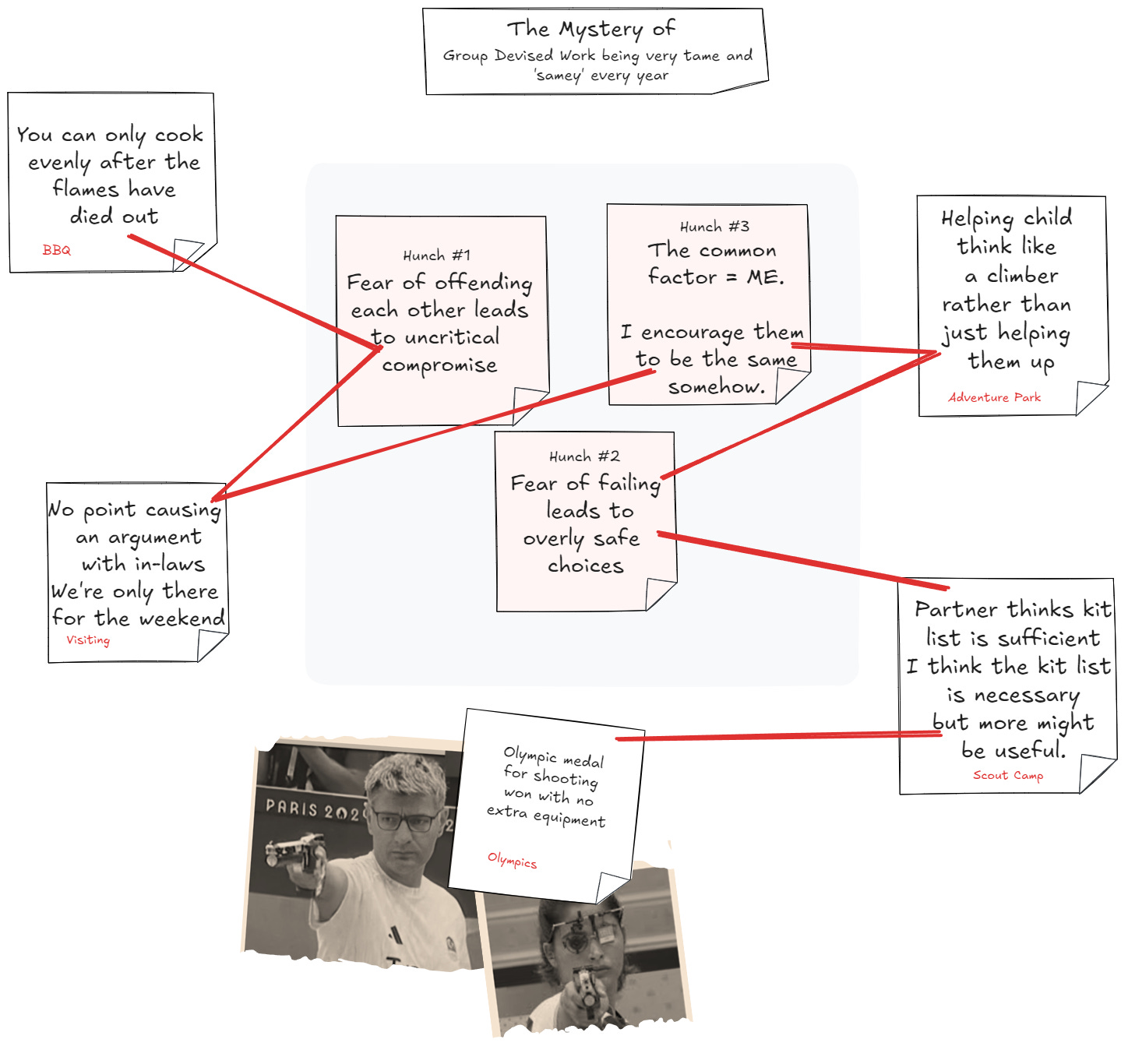
Connections between clues might suggest similarity, either/or options, or causation. The physical representation of these relationships acts as a visual prompt for unconscious processes, planting a seed in the back of your mind. You may find the odd clue that doesn’t link straight away - that’s fine - you can come back to it later.
Note: Linking also distinguishes your evidence board from the scary wall of photos in a horror movie stalker’s bedroom!!!
Step 3: Third Level - The Plan
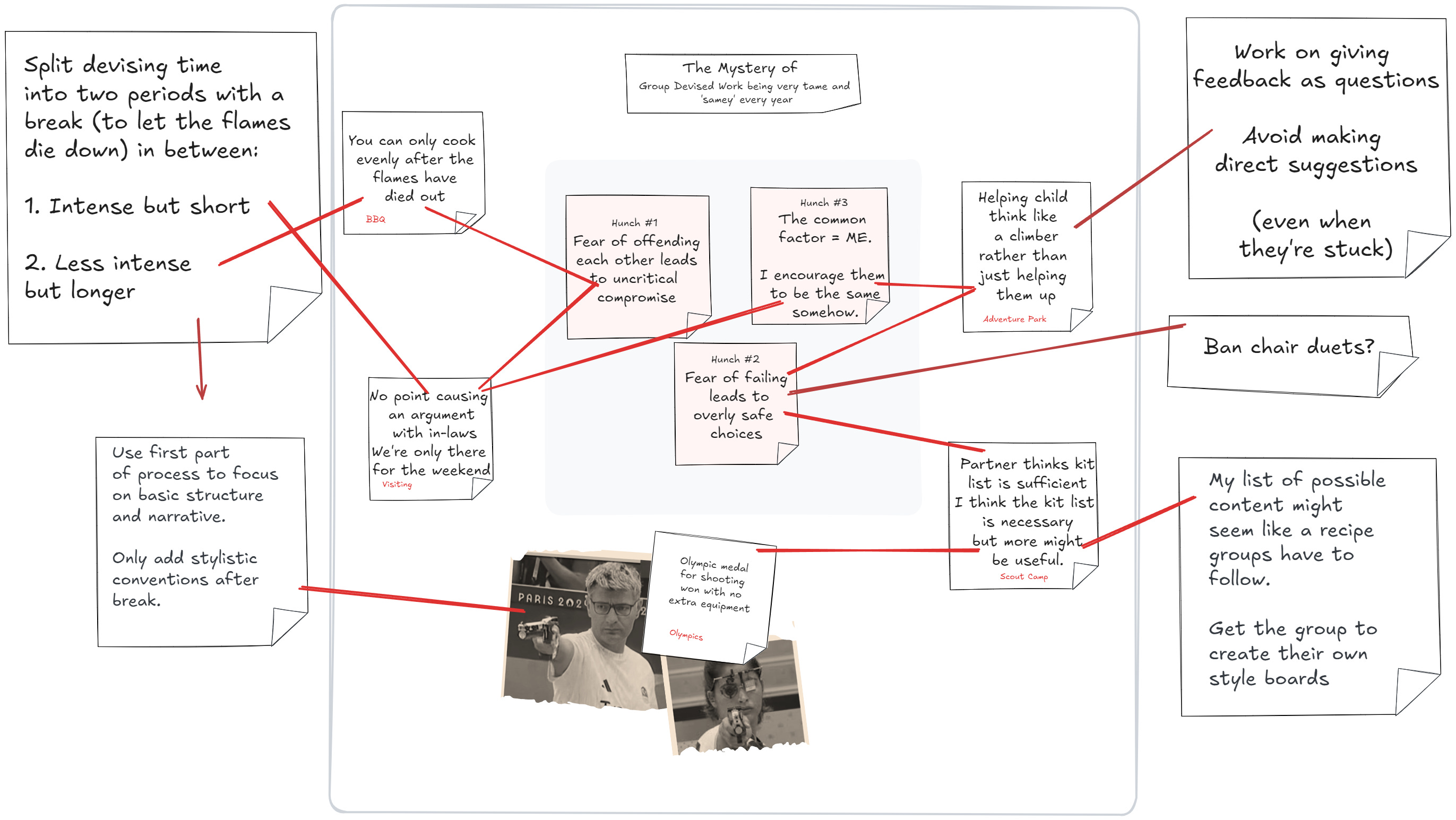
The outer ring is the place for practical ideas that are inspired by the clues and hunches. This is the stuff you might actually apply to your practice. Sometimes these ideas jump straight out of one the clues (or even one of the hunches) in which case they can be added as you go. More often the practical ideas occur once the board has begun to fill up. The art at this stage is to consider the relationship suggested by the clue and translate this to your practical context. For instance:
IF the barbecue clue is about timing- heaping the coals to get it started
AND then spreading them out for more even cooking -
THEN the plan could be about timing- using an intense period to get a piece blocked out
AND then spreading the rehearsals to allow development to happen over time.
Once again, it is good to visually link the idea to the clue that inspired it. In this way the chain of inference can still be followed. Additionally, as you review the board, these visual links can spark further creativity. Seeing how one idea evolved from a specific clue can lead to new insights and connections, potentially generating even more innovative ideas.
The answer is out there!!!
It’s not always easy to think creatively. It’s even more difficult if you are constantly switching contexts between leisure, family and work tasks. Perhaps we shouldn’t try so hard to jump to solutions but instead create the opportunities for our unconscious notice the answers in the world around us.
Sources:
Newport, C., 2016. Deep work: rules for focused success in a distracted world. First Edition ed. New York Boston: Grand Central Publishing.
Newport, C., 2024. _Slow productivity: the lost art of accomplishment without burnout. London: Penguin Business.
Of course, at heart, this is a systemic issue, common across all facilitation work that fails to recognise the time required to reflect, develop and update practice. In thrall to an industrial myth, that a production line only needs to be set up once to consistently deliver the 'goods', funders and employers typically focus on hours of visible 'delivery'.